
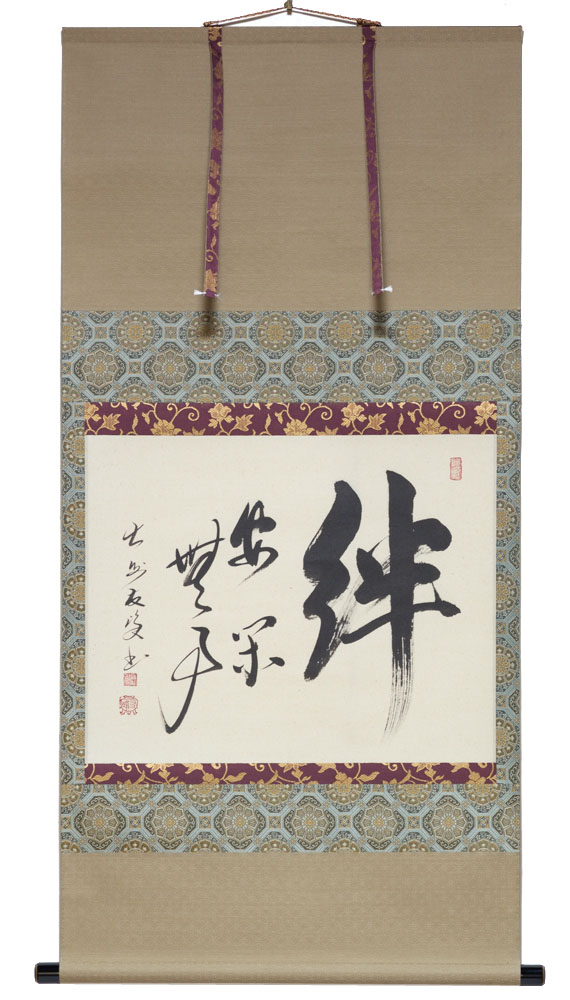
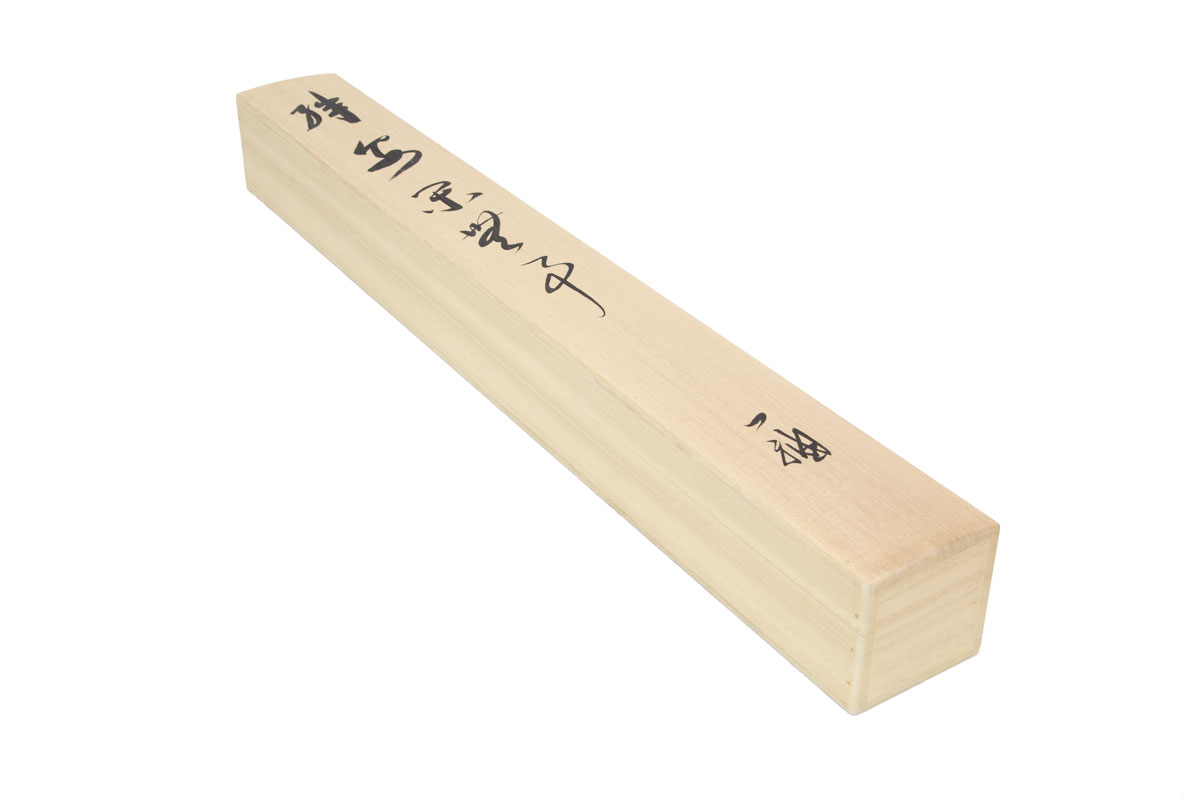
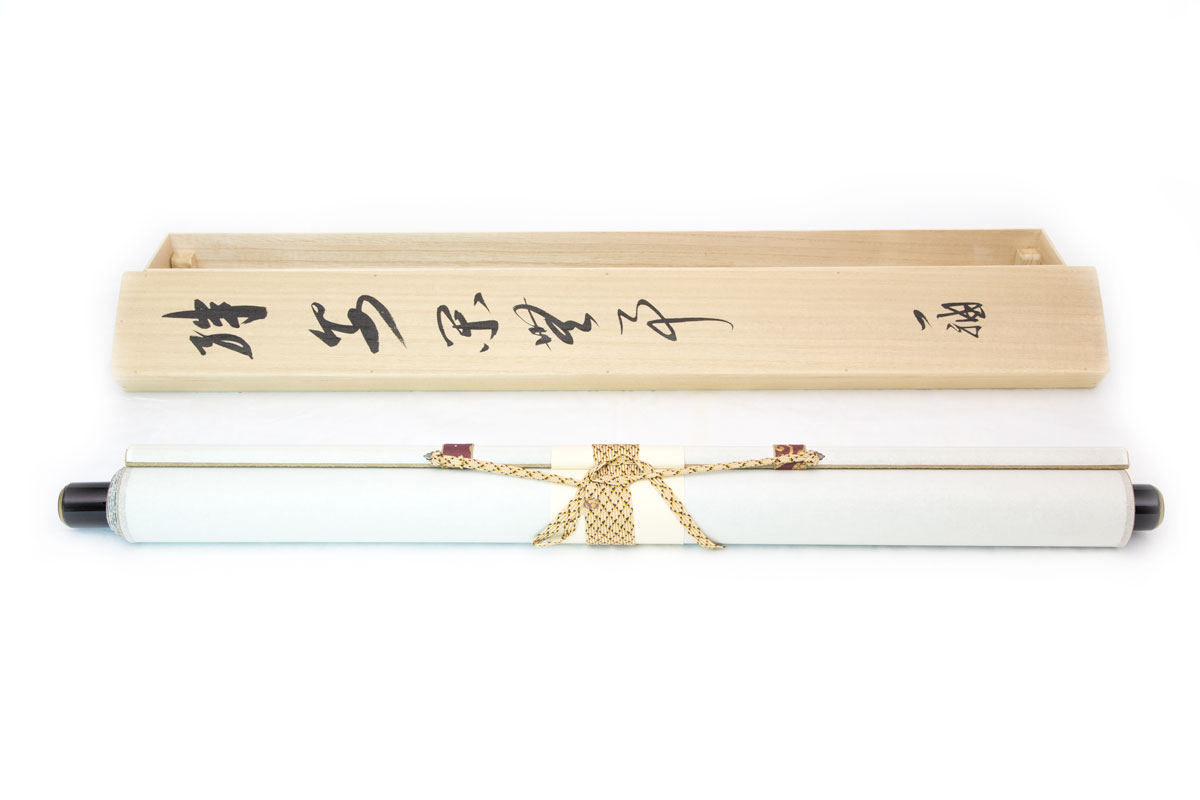
In ordinary Chinese the word ban (絆) functions both as a noun that refers to a “tie,” “shackle,” or “fetter” (e.g. a rope used to bind a horse’s legs), and a verb that means “to bind,” or “to tie up.” In ordinary Japanese, when the word 絆 is used in this sense as a noun it is pronounced kizuna, and when it functions as a verb it is pronounced tsunagu.
However, in Chinese Zen, the word ban絆
refers specifically to a cloth strap, typically about one inch wide and six feet long, that is used by monks to tie back the long, dangling sleeves of their robes in preparation for engaging in all kinds of manual labor. In Japanese Zen, the strap is called a tasuki絆, also written with the character 襷
, and the same word is also used verbally, to indicate the act of tying back the sleeves. One end of the tasuki strap is held in the teeth while the other end is wrapped under the left arm, over the right shoulder to the front, under the right armpit to the rear, and across the back to the left where the two ends are tied behind the neck, forming a figure-eight that looks like a horizontal “X” when viewed from the rear. The tasuki strap prevents the robe sleeves from interfering with arm movement when working, and also helps keep the sleeves from becoming soiled.
In the Zen tradition, the expression “sleeves tied back”絆
Chinese: ban
Japanese: tasuki
thus has the meaning of “getting down to work,” in much the same sense as the English expression “rolling up one’s sleeves.” Domestic and outdoor manual labor of all sorts — cooking, cleaning, mending, gardening and cutting firewood — is highly valued in Zen monastic life as a mode of spiritual cultivation. Monks are taught to work mindfully, with great attention to doing a good job, and in the spirit of helping others.
The Imperial Edition of Baizhang’s Rules of Purity勅修百丈清規
, an influential set of Zen monastic rules compiled in China between the years 1335 and 1338, has a section on “communal labor”普請, short for “all invited to work” 普請作務
that reads:
Upon hearing the signal from the wooden fish [gong] or drum, every [monk] wraps his cloth strap絆
Chinese: ban
Japanese: tasuki
around his shoulders and ties it above his left arm [to hold back the sleeves of his robe], then hastens to the place for communal labor and reports for work. With the exception of those left to guard the various offices, the person on duty in the sangha hall, and the old and the sick, all must report and participate equally. You should reflect on the ancient one’s [Baizhang’s] admonition: “A day without work is a day without eating.”
或聞木魚或聞鼓聲。各持絆膊搭左臂上。趨普請處宣力。除守寮直堂老病外。並宜齊赴。當思古人一日不作一日不食之誡。
A famous treatise by the Japanese Zen master Dōgen (1200-1253) entitled Admonitions for the Chef典座教訓
also lauds “tying back the sleeves”:
In the past, eminent men in possession of the way practiced in this way [as chefs], working energetically with their own hands. In this latter day, how can we who are so late getting started [in our practice] be negligent about this? The ancients said that chefs regard tying back their sleeves絆
Japanese: tasuki
[for manual work] as the way-seeking mind.
上古有道之高士、自手精至、修之如此。後来晩進、可怠慢之歟。先来云、典座以絆為道心矣。
The expression, “Safe and Relaxed, No Concerns,” is found in a text written in Qing dynasty (1644-1911) China entitled the Encouraging the Necessities of Pure Land Practice勸修淨土切要
:
If you are to be like a person who is peaceful and at ease, truly it is best to recite the name of [Amitābha] Buddha (Ch. nianfo 念佛, J. nenbutsu). Then, if your family has a regular business, you will be able to run it without difficulties, and if you have a father or older or younger brothers, you will be able to depend on them. Your person will be safe and relaxed, with no concerns安閑無事
Chinese: an xian wu shi
Japanese: ankan buji
.
即如清閑人。正好念佛。或家有恒業。不勞經營。或有父兄子弟可靠。自身安閑無事。
The influential Japanese Zen Master Hakuin Ekaku白隱慧鶴
(1685-1768) borrowed the expression from the Pure Land tradition and gave it a Zen twist:
It is a rule: No speaking, no explaining; one, two.
It is a rule: Safe and relaxed, no concerns; one, two.
一、無言無説、壹兩。一、安閑無事、壹兩。
What Hakuin meant was that instead of calling the name of the Buddha Amitābha over and over and counting the recitations on prayer beads (“one, two, etc.”), which was the ordinary practice of Pure Land Buddhists, one should remain silent moment after moment and concentrate on one’s work.


