“Bright Moon and Fresh Breeze; All Together in One Family”

Inscribed Zen Saying
明月清風共一家
Chinese: ming yue qing feng, gong yi jia
Japanese: meigetsu seifū, tomo ni ikka
Translation: “Bright Moon and Fresh Wind… We are All Together in One Family”

Gist of Saying
Living beings are all alike in that they share the innate, pure buddha-nature, while also engaging in all sorts of deluded actions (karma).
See full explanation ↓ 

Description of Item
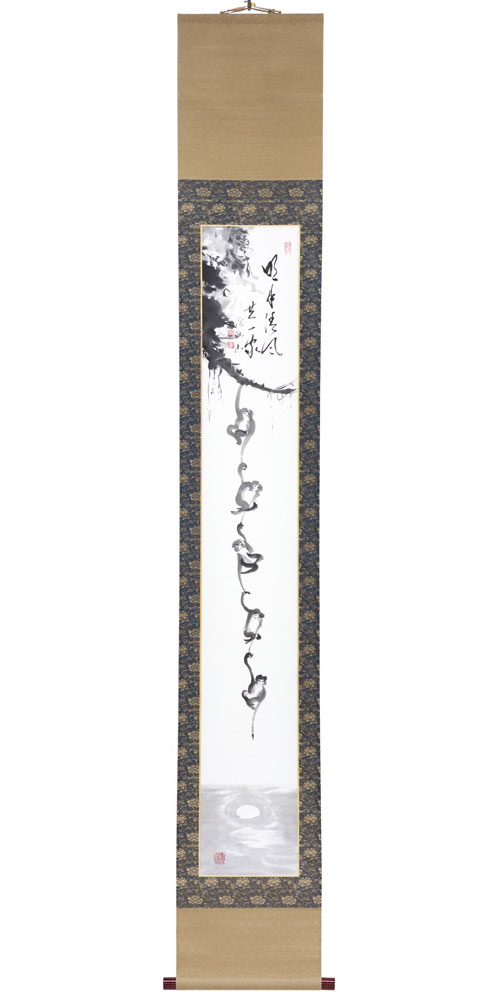
・Hanging scroll (kakejiku 掛軸) with image of Monkeys and the Moon (engetsu zu 猿月図) and calligraphic Zen saying (ji 字), artist’s signature and seals (in 印)
・Half Cut (hangiri 半切) style (inscription above image, reads top to bottom, right to left)
・Overall dimensions: 12 inches x 79 inches (30 cm x 200 cm)
・Hand mounted using damask silk brocade (hon donsu 本緞子)
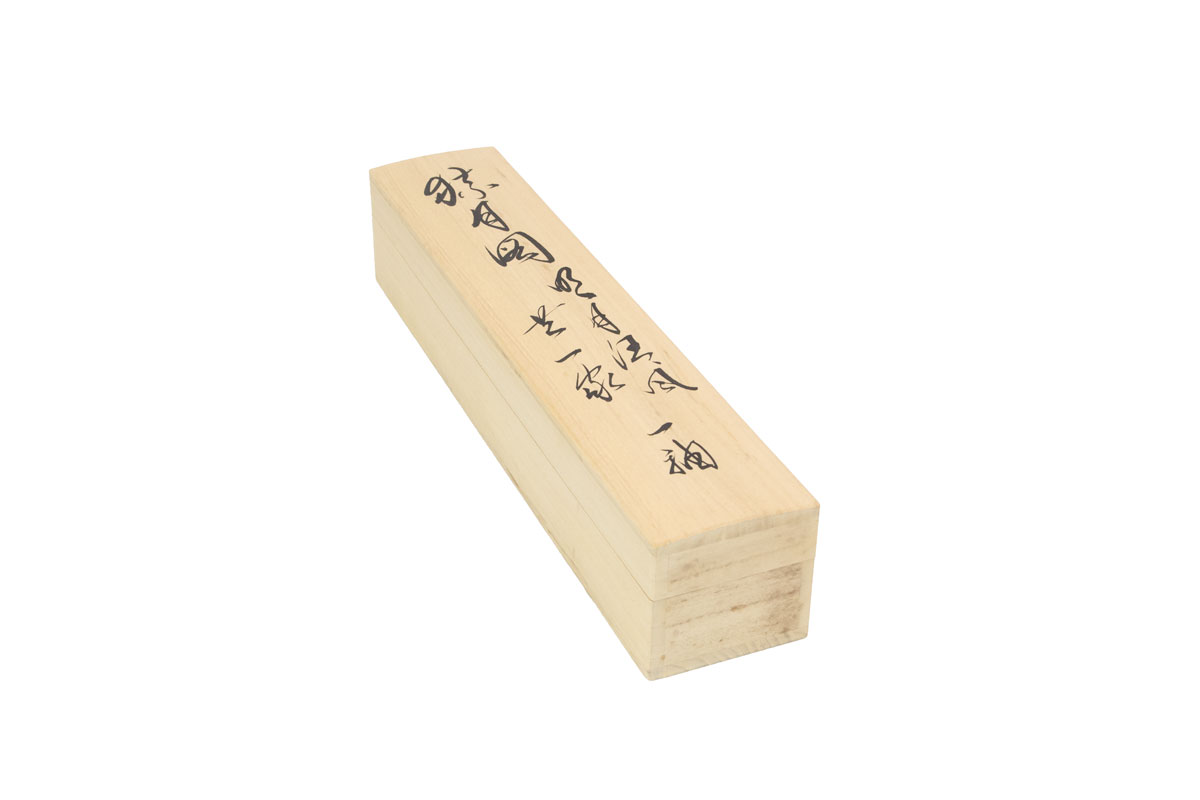
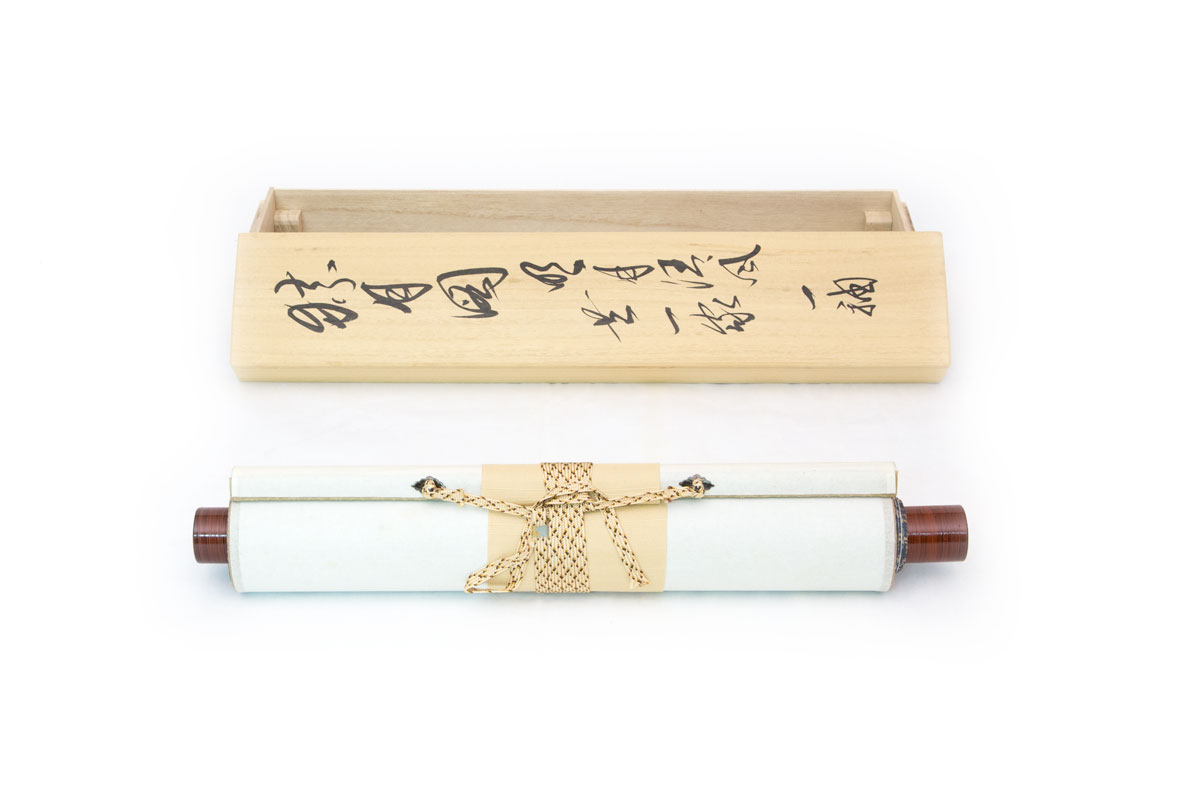
・Comes in paulownia wood (kiri 桐) storage box, inscribed by artist


$2,200.00

Available

SKU: 5278 Category: Tags: , , ,

The locus classicus for this saying in Zen literature is the biography of the Chinese Zen master Huqiu Shaolong虎丘紹隆
, which appears in the Jiatai Era Inclusive Record of the Flame嘉泰普燈録
Chinese: Jiatai pudeng lu
, compiled around 1204:

 In a convocation marking the end of the monastic retreat…the master [Huqiu] then said, “[to quote Zen master Zhaozhou (778-897)] ‘Do not attach to the place where buddhas exist.’ Above, there is nothing to look to for support. ‘Run quickly past the place where buddhas do not exist.’ Below, cut off your own self. From the start, there is no facing or turning away; fundmentally, the nets and cages [of conceptual thought] are ripped apart. Coming out of the gate, you ram into Subhūti; not an inch of grass grows for a thousand times ten thousand leagues. Of their own, the long-beaked birds cease their chatter and perch beneath fragrant trees. If you deceive yourself, you will speak of Zen and speak of the Way. Markaṭas [monkeys], even if their minds hang from the tops of trees in their minds, cannot prevent their bodies from sinking under the sea. Do not move in deluded attachment. If you move in deluded attachment, you deserve thirty blows. At the end of the retreat when we confess our transgressions, in a single verse, what should we say? [Let’s say] Bright Moon and Fresh Wind… We are All Together in One Family.”

解夏上堂。。。師乃云。有佛處不得住。上無攀仰。無佛處急走過。下絶己躬。從來無向背。本自絶羅籠。出門撞著須菩提。寸草不生千萬里。自是長觜鳥。休言芳樹不棲。謾自説禪説道。摩斯吒直饒心掛樹頭。未免身沉海底。莫動著。動著三十棒且置。休夏自恣一句作麼生道。青山綠水元依舊。明月清風共一家

In this sermon, the “one family” that Huqiu refers to could be the community of monks who have spent the three months of the monastic retreat
in training together and are about to engage in the rite of confession自恣
that marks the end of the retreat. However, because he speaks of birds and monkeys, “one family” could also mean all living beings (including humans), who together share the natural world that is alluded to by the words “bright moon and fresh wind.” At the same time, the expression “bright moon”明月
is a symbol of awakening, and “fresh wind”清風
has the double meaning of “pure habits,” i.e. the lifestyle of monks who uphold rules of morality. In sum, the point of Huqiu’s verse saying seems to be that all living beings are both caught up in delusion and immoral action, and fundamentally awakened and pure.
This “image of monkeys and the moon” illustrates a Chinese folk tale:

One evening the leader of a troop of monkeys happened to climb out on a tree limb that reached over a pool. Looking down he saw the moon reflected in the water and became alarmed. “Help,” he called to his kin, “The moon has fallen into this pool and needs to be rescued.” The other monkeys were perplexed: “But how can we reach it?” they asked. The leader instructed them to form a dangling chain, each holding the hand of the one above, so that a monkey at the very bottom could grab the moon and bring it up. Unfortunately, the tree limb broke under their weight and all the monkeys fell into the water.

 In Mahāyāna Buddhist lore, the full moon is a symbol of awakening悟り
Japanese: satori
. The “moon reflected in the water”水中月
Japanese: suichū getsu
 is also a metaphor for the emptiness of dharmas, which is to say, the insight that the “things” we conceive do not actually have the separate, independent existence that we ordinarily attribute to them. We imagine that a thing called “awakening” exists because we have a word for it, but our attempt to grasp it using conceptual thought is as futile as the monkeys’ effort to lift the moon out of the water. In the context of this Zen painting, therefore, the tale of the monkeys is an an allegory for deluded attachment to the very words — the Buddhist teachings — that are intended to point the way toward awakening. The leader of the monkeys, perhaps, represents a Buddhist teacher, while the other monkeys are his disciples. Their deluded, albeit well-meaning effort is a group affair, as is the invention of language among human beings.

Calligraphic Signature

“Written by Keisen” (Keisen sho 渓仙書)
Keisen is Master Takahashi’s ordination name.

Comment Seal

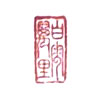
“White Clouds for 10,000 Leagues” (hakuun manri 白雲萬里)
A metaphor for an awakened state of mind that remains serenely detached even in the midst of its own thought processes, which float by like clouds.
In-Hakuun-Manri

Signature Seals

“Written by Keisen” (Keisen sho 渓仙書)
Keisen is Master Takahashi’s ordination name.
In-Keisen
“Yūhō” (友峰)
Yūhō is Master Takahashi’s personal name.
In-Yuhou
“Yūhō” (友峰) kettle pot style
Yūhō is Master Takahashi’s personal name.
In-Pot


Blarga