
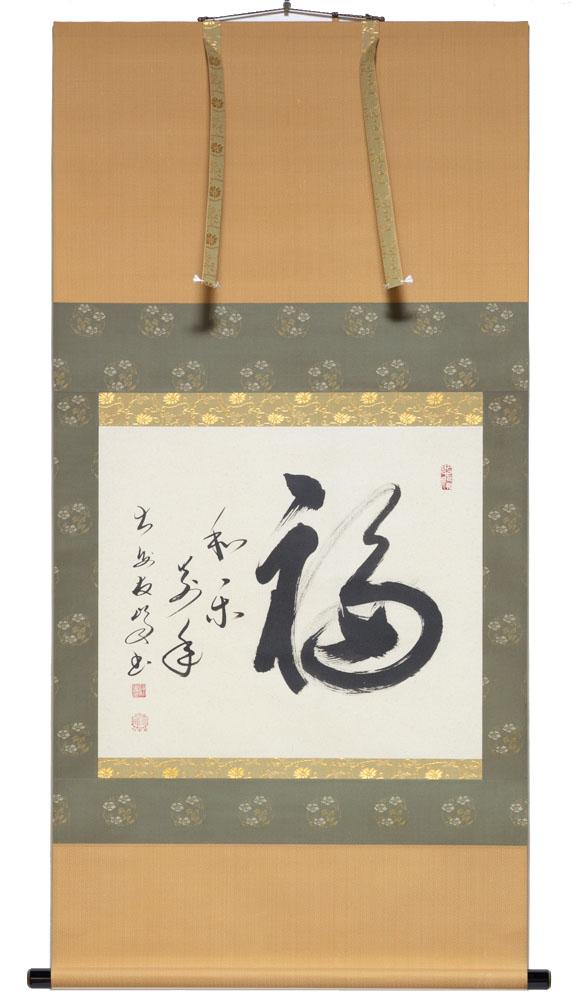
The large character on the right — fuku (福)— is translated here as “blessings,” but it can also be rendered into English as “good fortune,” which in a secular context is usually associated with such things as success in one’s career, wealth, good health, having many children, long life, and so on. In Buddhist texts, fuku福
refers more specifically to good karma: the positive fruits of good actions. The four smaller characters written to the left of fuku福
represent, in effect, a comment on the theme of “blessings,” or a more detailed description of what those entail. The two characters wa (和) and raku (樂), translated here as “peace” and “happiness,” can also be rendered as “harmony” and “ease” or “pleasure,” respectively. The final two characters — mannen (萬年) — are translated here as “forever,” but the literal meaning is “ten thousand years.”
The sentiment expressed in this inscription, although it reads like a prayer, is not especially Buddhist and does not appear in any Zen texts. However, if viewed as a Zen saying, it could refer to the way things look from the standpoint of awakening悟り
Japanese: satori
.


