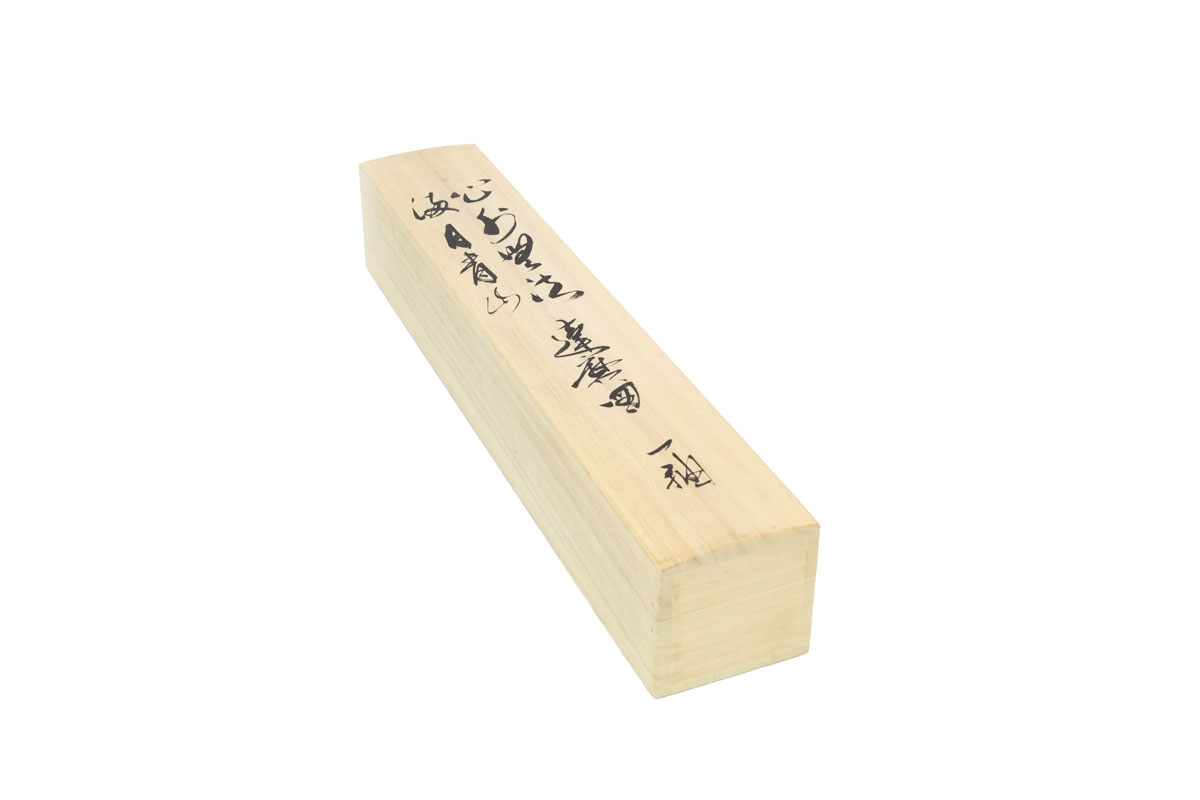
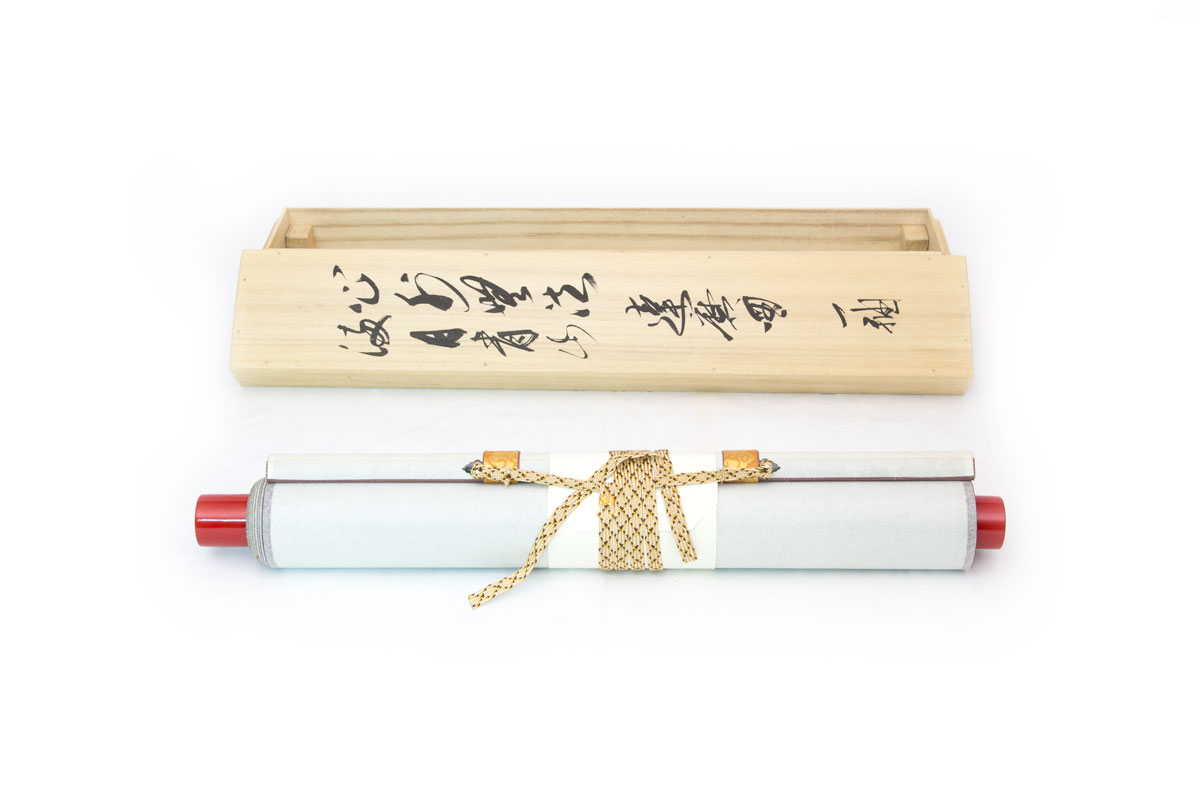
The locus classicus of the saying, “Apart from mind there are no things; filling the eyes are green mountains,” is the Wanling Record of Zen Master Huangbo Duanji黃檗斷際禪師宛陵錄
, compiled by disciples of Huangbo Xiyun黃檗希運
(d. 850):
Mountains are mountains, water is water. Monks are monks, laity are laity. Mountains, rivers, the earth, sun, moon, stars and planets — the totality of things — are not separate from your mind. The three thousand realms of existence are all your own self. Where else [than in one’s own mind] could there be an acknowledgement of so many categories? Apart from mind there are no things; filling the eyes are green mountains. The realm of empty space is a clear shining ground, without so much as a strand of hair that would allow you to formulate any views. Hence, all sounds and sights are the wisdom eye of buddha.
山是山水是水。僧是僧俗是俗。山河大地日月星辰。總不出汝心。三千世界都來是汝箇自己。何處有許多般。心外無法滿目青山。虛空世界皎皎地。無絲髮許與汝作見解。所以一切聲色是佛之慧目。
The expressions “realm of empty space” and “clear shining ground” found here are both metaphors for the mind itself, which other Zen texts often refer to as the “mind-ground”心地
or “buddha-mind”佛心
, and which is said to that underlie and pervade all of existence. However, in the Zen tradition, as in the Yogācāra or “consciousness only”唯識
school of philosophy that it draws from, “mind” is never conceived as anything that exists apart from the five kinds of sense data (sights, sounds, smells, tastes, tactile sensations) and the mental phenomena (ideas) that represent a sixth class of dharmas法
or “things.” In another text, the Essentials of Transmitting Mind傳心法要
, Huangbo juxtaposes the saying “apart from mind there are no things” with the statement that “apart from things there is no mind”法外無心
. Thus, when a person gains awakening悟り
Japanese: satori
and realizes that “apart from mind there are no things,” they do not lose their ordinary experience as that is manifested through the “six senses”六根
of eye, ear, nose, tongue, body, and the faculty of thought. Rather, one’s experience of the world is intensified because it is no longer distorted by what Huangbo calls “views”: deluded beliefs in “things” that are imagined to exist in and of themselves, external to one’s own mind. That is the thrust of the phrase, “filling the eyes are green mountains.”
There is also a famous poem in four phrases, attributed to National Teacher Deshao德韶國師
(891-972), that incorporates (without attribution) the two-phrases spoken earlier by Huangbo. Deshao’s poem appears in the Jingde Era Record of the Transmission of the Flame景德傳燈錄
(compiled in 1004), the kōan collections known as the Blue Cliff Record碧巖錄
and Congrong Hermitage Record從容錄
, and numerous other classical Zen texts. It reads as follows:
The Top of Tongxuan Peak
is not the Human Realm.
Apart from Mind there are No Things;
Filling the Eyes are Green Mountains.
| 通玄峯頂
不是人間
心外無法
滿目青山
|
According to Deshao’s biography, he was taking a bath at monastery on Tongxuan Peak when he suddenly understood something that his former teacher, the Zen master of Mt. Longya龍牙山
, had said to him earlier: “Seeker of the Way, accord with Thusness道者合如是
!” Later, when he was training under Fayan Wenyi法眼文益
(885–958), he had another, more complete awakening that he expressed in the aforementioned poem. Upon hearing it Fayan said, “This single poem can establish my lineage,” and he recognized Deshao as his dharma heir and leading successor.
Bodhidharma (Darumazu 達磨図)
Bodhidharma菩提達摩 or 菩提達磨
Chinese: Putidamo
Japanese: Bodaidaruma
was an Indian Buddhist monk, a meditation master who was active in China in the early sixth century and came to be revered as the founding patriarch初祖
of the Zen lineage禪宗
in that country. Very little is known about the historical Bodhidharma, but his legendary biography grew in detail from the eighth through the eleventh centuries, and he became an emblematic figure much invoked thereafter in Zen literature and art.
According to traditional accounts, the Zen lineage was founded when the Buddha Śākyamuni conveyed his awakening — his “subtle mind of nirvāṇa”涅槃妙心
, which is “signless”無相
— directly to one of his disciples, the monk Mahākāśyapa, in what is characterized as a “separate transmission”別傳
that took place “apart from the teachings”教外
of the sutras. Mahākāśyapa later transmitted the “buddha-mind”佛心
to another monk, Ānanda, who became the second patriarch of the Zen lineage in India. The “mind-dharma”心法
, as it was also called, was subsequently handed down from master to disciple through the generations until it reached Bodhidharma, the 28th patriarch, who was charged by his master Prajñātāra (the 27th) with transmitting it to China.
The lore about Bodhidharma’s career in China includes many famous incidents. He is said to have “come from the west” by sea, arriving in 527 C.E. He immediately had an audience with Emperor Wu of the Liang dynasty (502-557), whose avid patronage of Buddhist institutions he characterized as “having no merit”無功徳
. He then took up residence in the Shaolin Monastery少林寺
near Louyang, capital of the Northern Wei dynasty (386-535), where he spent nine years in meditation “facing a wall”面壁
. The monk Huike came to that monastery and was so ardent to be accepted as Bodhidharma’s disciple that he cut off his own arm斷臂
as an offering and was immediately instructed concerning true “peace of mind”安心
. Before returning to India, Bodhidharma recognized Huike as the second patriarch of the Zen lineage in China, stating that while other disciples had attained his “skin”皮
, “flesh”肉
,” and “bones”骨
, only the latter had “attained his marrow”得髓
. Bodhidharma, it is said, “only transmitted the mind dharma”唯傳心法
, no other teaching. With regard to his own method of instruction, he is often quoted as saying: “I point directly at the human mind吾直指人心
[so people may] see its nature and attain buddhahood見性成佛
,” and, “My method is to transmit mind by means of mind以心傳心
, without relying on scriptures不立文字
.”
Formal portraits of Bodhidharma (and all later patriarchs in his lineage) were first produced in Chinese Zen monasteries for use in annual and monthly memorial rites, when offerings of food and drink were made to those ancestral spirits. Later, all across East Asia, Bodhidharma also became an extremely popular subject of ink paintings inscribed with Zen sayings and used for decorative and didactic purposes. In keeping with his identity as an Indian monk, a “barbarian” from the west, he is conventionally depicted as a swarthy figure with a beard, earring, big nose, bulging eyes, and hairy chest. Moreover, in this ink painting by Zen master Takahashi, Bodhidharma’s body is outlined in a way that suggests the shape of the Chinese character for “mind” (心).