
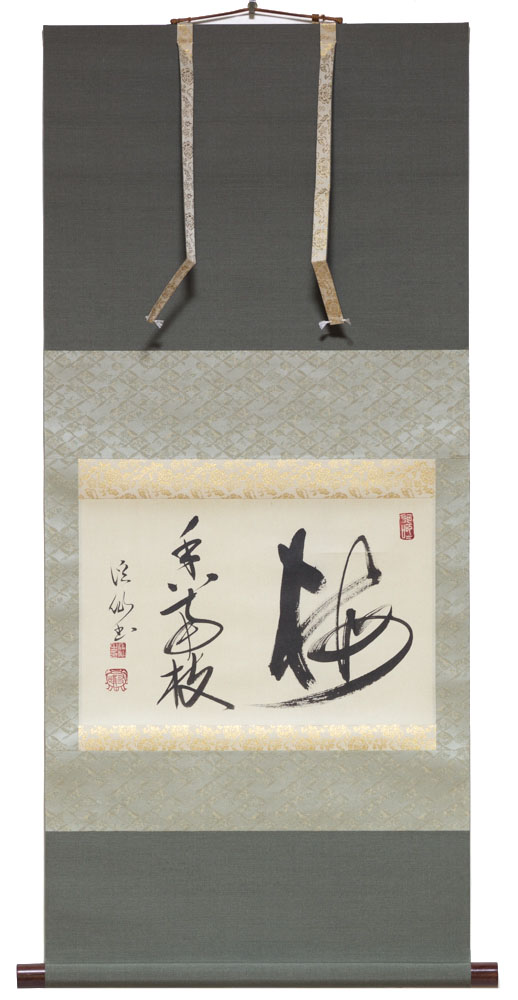
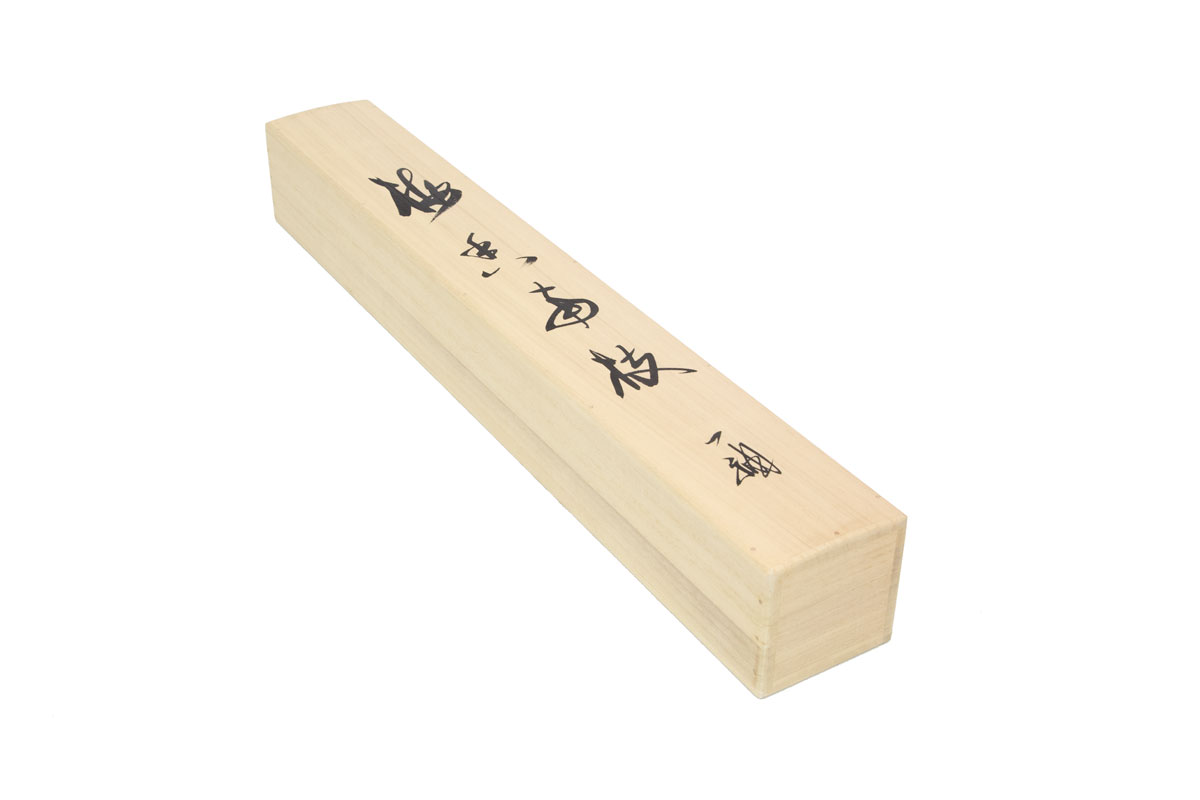
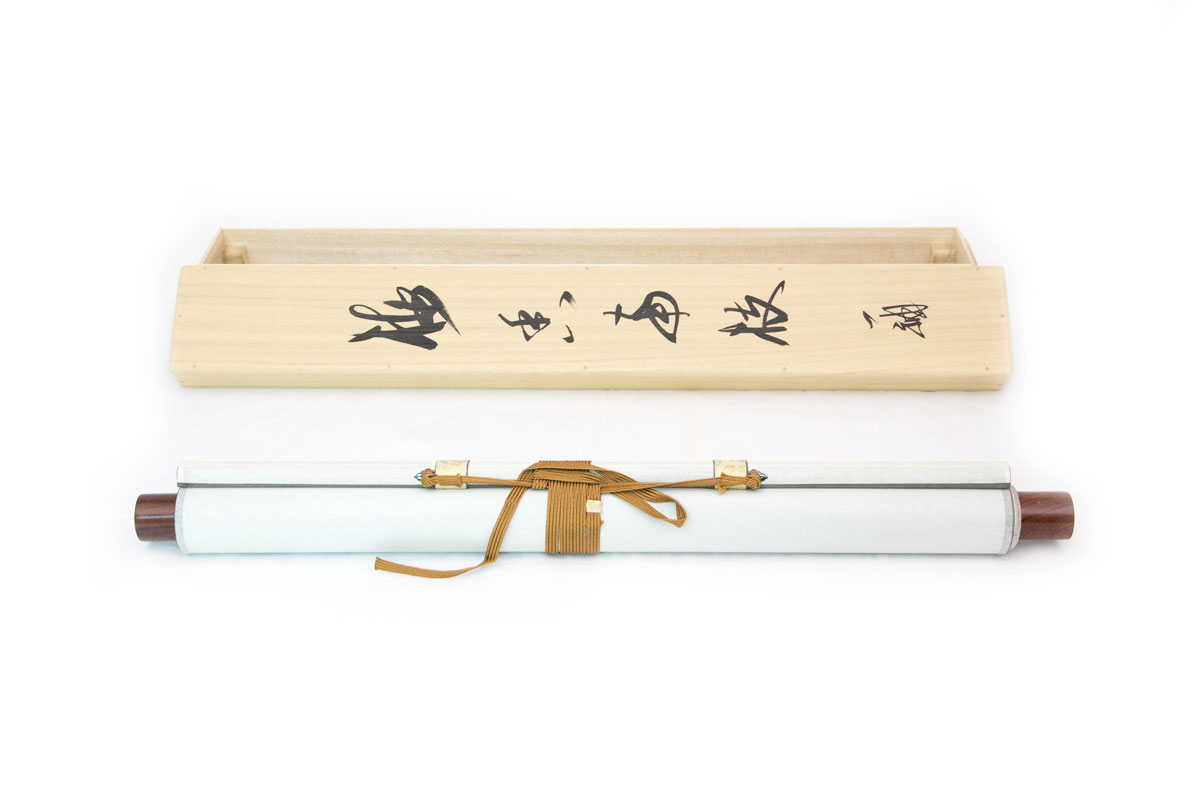
The poem in two phrases that contains the saying, “For the Fragrance of Plum, Southern Boughs,”
is found in the Discourse Record of National Teacher Daitō大燈國師語録
, in the following context:
At a small gathering of disciples on new year’s eve, a monk asked, “Although we send off the old year, it does not leave; although we greet the new year, it does not come. As for new and old, I basically have no awareness. As for leaving and coming, how could we possibly determine them?” The master [Daitō] said… [part elided]. He then said, “Day after day the sun rises in the east, and day after day the sun sets in the west. Rising and setting, it revolves by itself, until it arrives at the 30th [last] day of the 12th month [on the lunar calendar]. In the villages, drums are beaten for yakṣas (malignant spirits), and at the monastery walls songs for the gandharvas (heavenly musicians) are sung. It is the time when every person dresses in pure white, and each calls out ‘Great Peace [be with you]!” By comparison, we patch-robed monks see the sun at midnight. Who among us could distinguish the new [year] from the old? We simply sit in meditation in our rooms, our eyes observing and fully understanding how years are divided. Although we are starving and cold, we do not boil down the marrow of the phoenix, the pure flavor of which surpasses its golden meat. And why is that?” Banging his fly whisk, he said, “For snowy cold, northern peaks; for the fragrance of plum, southern boughs.”
除夜小參。僧問。舊年送不去、新歳迎不來。新舊本無情、去來豈可擬。師云。。。。乃云。日日日東出、日日日西入。一出一入自循環、逗到臘月三十日。村裏打祭鬼鼓、山塢唱樂神歌。人人帶淳素之風、箇箇稱太平之時。況衲僧家半夜見日頭、阿誰辨新舊。只管大坐當軒、眼眼相照分歳。雖然荒凉不烹鳳髓、其中清味勝他金臠。何故。撃拂子云。雪寒北嶺、梅香南枝。
“Seeing the sun at midnight” is a metaphor for awakening悟り
Japanese: satori
, which brings the realization that designations of time (i.e. “how years are divided”) are just human conventions that have no ultimate reality. In this context, Daitō’s poem in two phrases seems to allude to the workings of causes and conditions因縁
Japanese: innen
(a.k.a. karma) in the natural world, which is infinitely complex and (like the rising and setting of the sun) operates on its own beyond the reach of human conceptual schemes.


