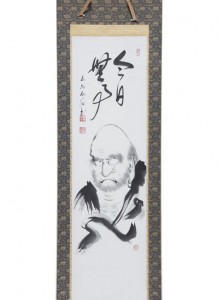
These four words — “flowers,” “birds,” “wind,” and “moon” — do not connect grammatically to form a sentence or any other kind of semantic unit, and the order in which they appear is essentially random. However, because they separately evoke the senses of smell (flowers), hearing (birds), touch (wind), and seeing (moon), when juxtaposed in this way they suggest a direct experience of the natural world that is unfiltered by the sort of abstract, conceptual thinking that typically occurs in the form of sentences. When the expression “flowers, birds, wind, moon” occurs in Japanese Buddhist literature, such as the writings of the Pure Land priest Rennyo蓮如
(1415-1499) and the “Five Mountains literature”五山文学
of Zen, it refers in a general way to poetry和歌漢詩
Japanese: waka kanshi
composed in either in Japanese or classical Chinese, because each of the four words often serves as the central motif of a poem that celebrates the beauty of nature. Poems in East Asia typically have a seasonal theme, and the mention of flowers, birds, wind or the moon also symbolizes spring, summer, winter, or fall, respectively.

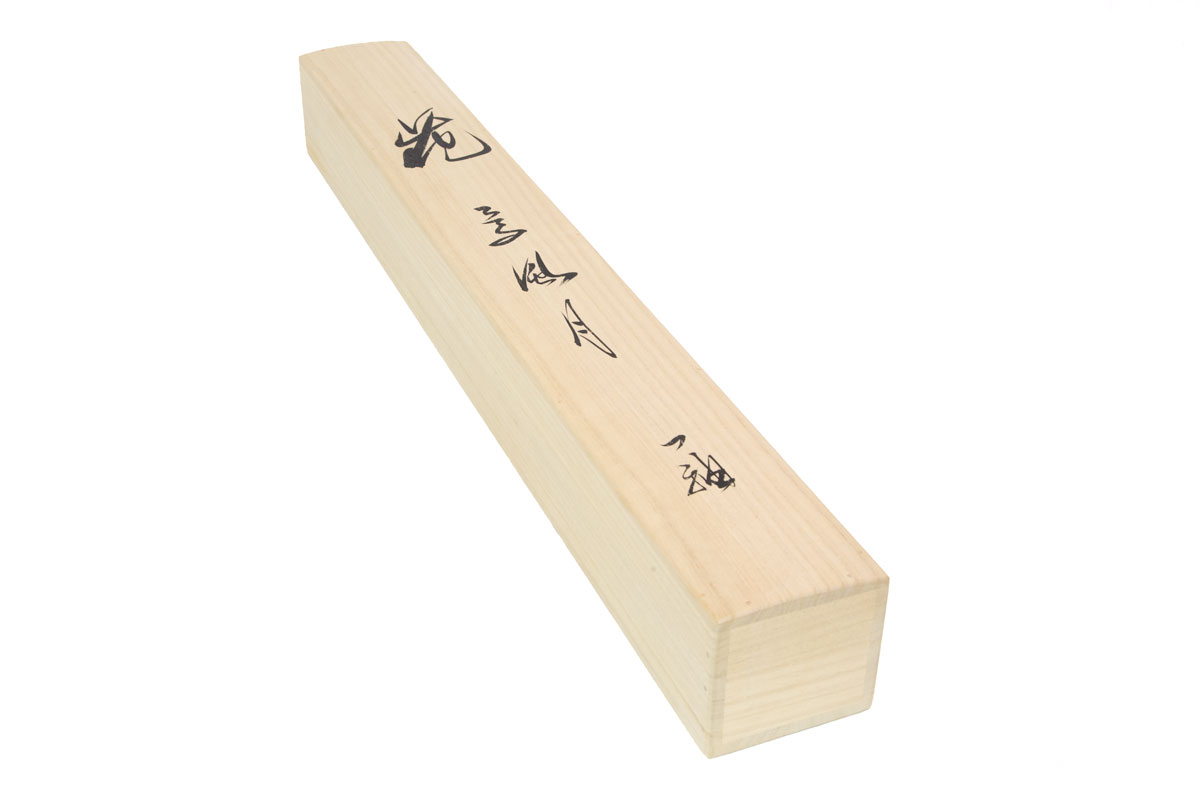
“Flowers / Birds, Wind, Moon”
Inscribed Zen Saying
花 鳥風月
Chinese: hua / niao feng yue
Japanese: ka / chō fū getsu
Translation: “Flowers / Birds, Wind, Moon”
Gist of Saying
Four separate words that evoke the senses of smell, hearing, touch, and seeing, respectively. Juxtaposed in this way, they suggest the beauty of the natural world as it is directly experienced, apart from language. The four words also allude to the four seasons as those are conventionally symbolized in Japanese poetry.
See full explanation ↓
Description of Item
・Hanging scroll (kakejiku 掛軸) with calligraphic Zen saying (ji 字), artist’s signature and seals (in 印)
・Horizontal (yokomono 横物) style (lateral inscription, reads right to left & top to bottom)
・Overall dimensions: 22 inches x 49 inches (56 cm x 124 cm)
・Hand mounted using double layer damask silk brocade (nichō hon donsu 二丁本緞子)
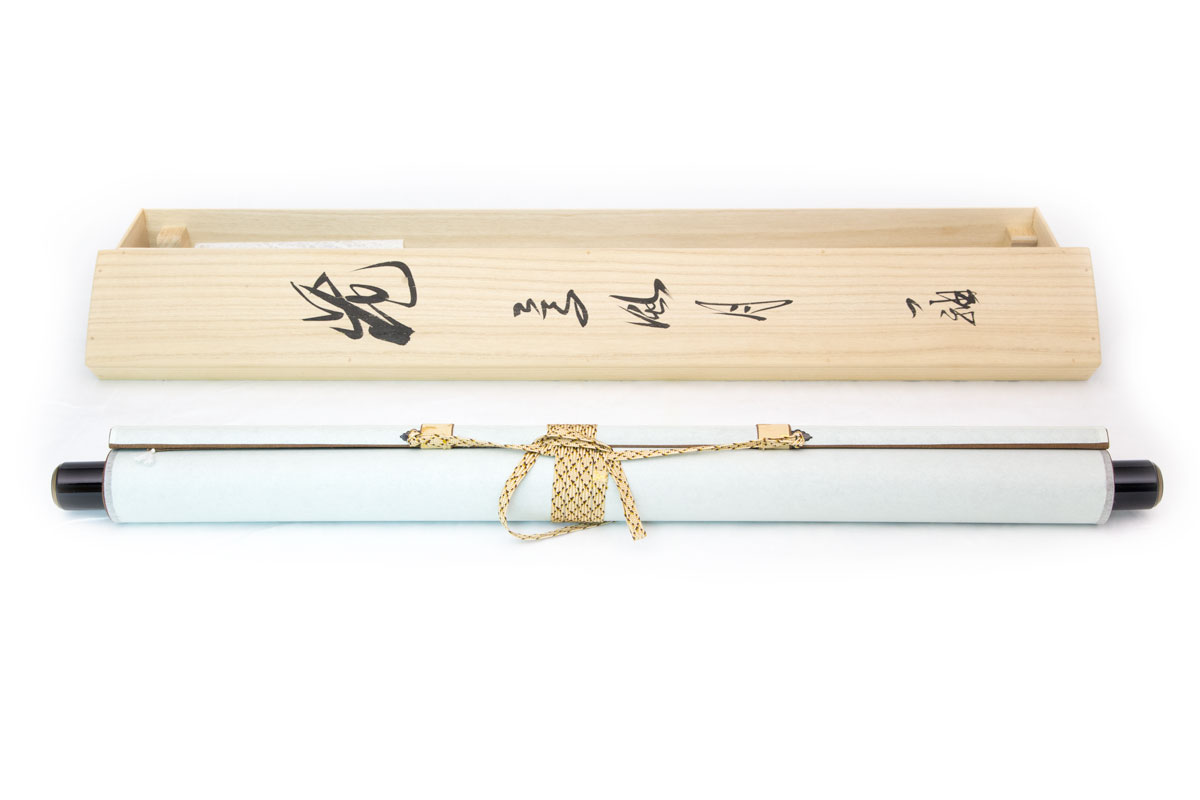
・Comes in paulownia wood (kiri 桐) storage box, inscribed by artist
$1,700.00
Sold
Calligraphic Signature
| “Written by Keisen” (Keisen sho 渓仙書) Keisen is Master Takahashi’s ordination name. |
Comment Seal
| “White Clouds for 10,000 Leagues” (hakuun manri 白雲萬里) A metaphor for an awakened state of mind that remains serenely detached even in the midst of its own thought processes, which float by like clouds. | 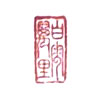 |
Signature Seals
| “Keisen, Monastery Abbot” (Keisen sanshu 渓仙山主) Keisen is Master Takahashi’s ordination name. |  |
| “Yūhō” (友峰) Yūhō is Master Takahashi’s personal name. |  |
Blarga