
Master Yūhō Takahashi
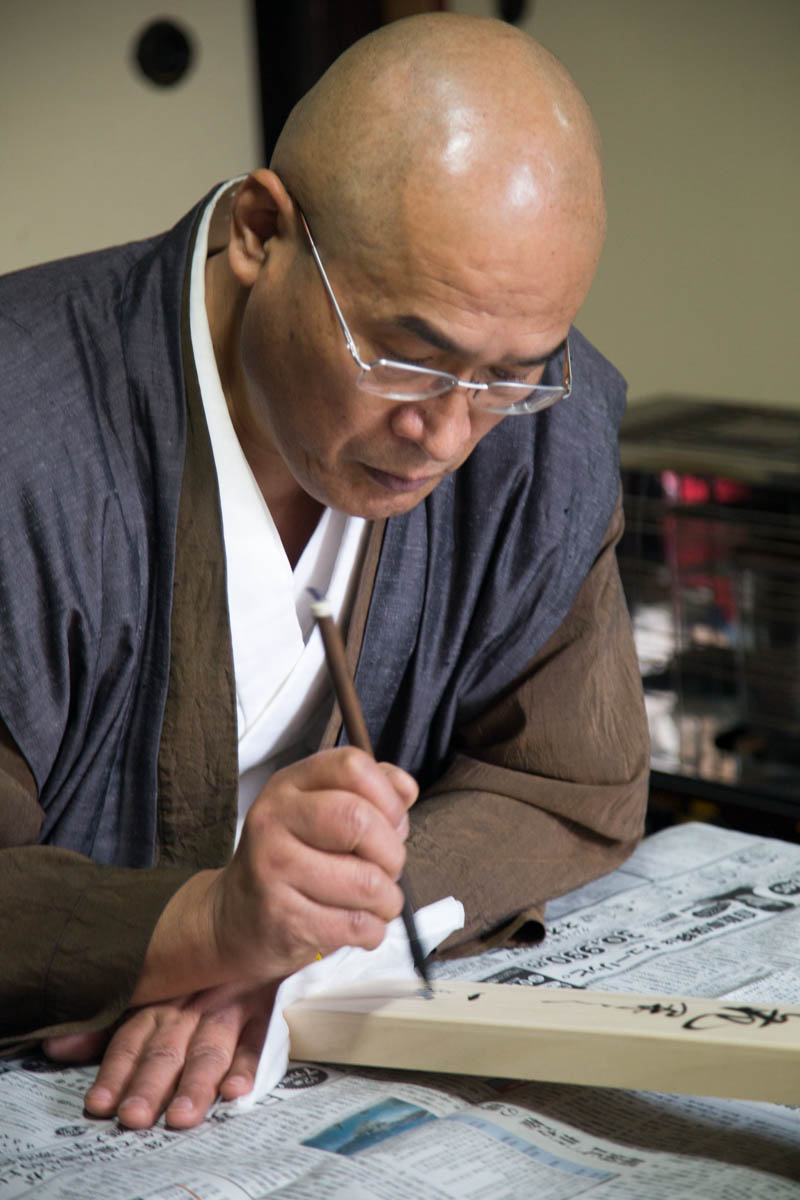
Yūhō Takahashi (高橋友峰) was born in Fukui City, Japan, on January 25, 1948. Ordained while still a boy and given the dharma name Keisen Yūhō渓仙友峰
, he was raised at Daianzen-ji大安禅寺
in Fukui. In 1970, he graduated from Hanazono University in Kyoto with a degree in Buddhist Studies. He then spent six years in intensive Zen practice at the Kaisei-ji Sōdō海清寺僧堂
in Nishinomiya City, a special training monastery of the Myōshinji Branch of the Rinzai Zen School. There he worked on kōans (topics for Zen meditation) under the guidance of the rōshi, Zen Master Kasumi Bunshō春見文勝
(1905-1998), and rose to the top of the ranks of trainee monks雲水
Japanese: unsui
. In 1989, Takahashi was formally installed as abbot住職
Japanese: jūshoku
of Daianzen-ji. Under his leadership, the fine original buildings of Daianzen-ji have all been restored, and the temple has been designated by the Japanese government as an Important Cultural Property重要文化財
. In 2011, Takahashi also became the abbot of second Zen temple, Hōshō-ji寳勝寺
in Kanazawa City. Takahashi’s training in Zen art began as a boy at Daianzen-ji, where he grew up surrounded by the 17th century Zen paintings禅画
Japanese: zenga
that decorate the sliding paper doors襖
Japanese: fusuma
of the temple. He was exposed there to exquisite works of calligraphy墨蹟
Japanese: bokuseki
by renowned Zen masters such as the founding abbot, Daigu Sōchiku大愚宗築
(1584-1669), and Hakuin Ekaku白隱慧鶴
(1685–1768), which still hang on the walls (although some have since been moved into a museum on the premises). At Kaisei-ji, Takahashi was surrounded by the renowned Zen art of former abbots Nantenbō南天棒
(1839-1925) and Deiryū泥龍
(1895-1954). He was instructed in the use of brush and ink by Deiryū’s leading disciple, the abbot Kasumi Bunshō, who he served as personal attendant隠侍
Japanese: inji
for several years. Takahashi’s works of calligraphy and ink painting, while clearly influenced in their dynamic style and thematic focus by the three Kaisei-ji masters of the twentieth century, have now been honed by four decades of continuous practice and have evolved into something individual and unique. His mastery of Zen art has been attested in numerous one-man shows and demonstrations held at galleries and museums across Japan, in Paris (2011) and New York (2014).
Daianzen-ji
Daianzen-ji (大安禅寺 “Great Peace Zen Monastery”) is a beautiful old temple located on a mountainside overlooking the city of Fukui and belongs to the Myōshinji Branch of the Rinzai Zen school. It was founded in 1658 as the ancestral memorial templeJapanese: bodaiji
of the Matsudaira松平
clan, the lords of Echizen, a feudal domain on the Sea of Japan north of Kyoto that corresponds to modern Fukui Prefecture. The founding abbot was the eminent Rinzai Zen master, Daigu Sōchiku大愚宗築
(1584-1669), who with his patron, the fourth daimyō Matsudaira Mitsumichi松平光通
(1636-1674), built a magnificent set of buildings that were furnished with the very finest shrines, images, ritual implements, and decorative art that the exquisite Japanese craftsmanship of the day could produce. In 1672 a large meditation hall was added and Daianzen-ji became a sizable center of monastic training. Today, the temple retains most of its original buildings and furnishings, and has been designated an Important Cultural Property by the Japanese government. Two large new halls have been built to accommodate activities that attract numerous lay practitioners and visitors, including: sitting meditation坐禅
Japanese: zazen
practice, sermons on Buddhism法話
Japanese: hōwa
, vegetarian meals精進料理
Japanese: shōjin ryōri
, and tea ceremony茶道
Japanese: chadō
and flower arranging生け花
Japanese: ikebana
demonstrations and lessons.


Professor T. Griffith Foulk

T. Griffith Foulk (B.A., Williams College, 1971; Ph.D., University of Michigan, 1987) holds the Riggs Chair in Religious Studies at Sarah Lawrence College, where he has taught Buddhism and other Asian religions for more than 20 years. He previously headed the graduate program in East Asian Buddhism at Michigan, and has been a visiting professor at Toronto, UC Berkeley, and Stanford. Recognized around the world as a leading authority on the history of Chinese Chan and Japanese Zen Buddhism, Foulk has authored many scholarly monographs on textual, ritual, and institutional aspects of those traditions. Since 1996, he has been co-editor-in-chief of the Sōtō Zen Text Project, a major translation project sponsored by the Administrative Headquarters of Sōtō Zen Buddhism in Tokyo. From 1973 through 1976, Foulk practiced as a resident lay practitioner居士
Japanese: koji
at the Kaisei-ji Sōdō training monastery in Nishinomiya, Japan. There he engaged in kōan practice under Zen master Kasumi Bunshō春見文勝
(1905-1998), and began a life-long friendship with Takahashi Yūhō, who at the time was a leader of the monks in training雲水
Japanese: unsui
. In 1983, Foulk was formally ordained as a monk in the Sōtō school of Zen and trained briefly at its headquarters monastery, Eihei-ji永平寺
. Foulk’s academic expertise, together with his first-hand experience of Zen training in Japan, make him a highly qualified translator and interpreter of the inscriptions and images found in Japanese Zen paintings and calligraphy. His close collaboration with Takahashi ensures that the English translations are in full accord with the letter and spirit of the original works.
Zen in Ink
Zen in Ink is a partnership between Professor Foulk and his son Gene Foulk, with the support of Master Takahashi, to introduce Takahashi’s works to a wider audience outside of Japan. Zen in Ink is based in Ann Arbor, MI.
